How Zoos Are Turning Guests Into Wildlife Researchers
Understanding animal behavior is an important part of animal care, conservation, and exhibit management. Traditionally, collecting this kind of behavioral data can require significant staff time, with team members or volunteers observing animals, recording behaviors, and compiling data over long periods of time.
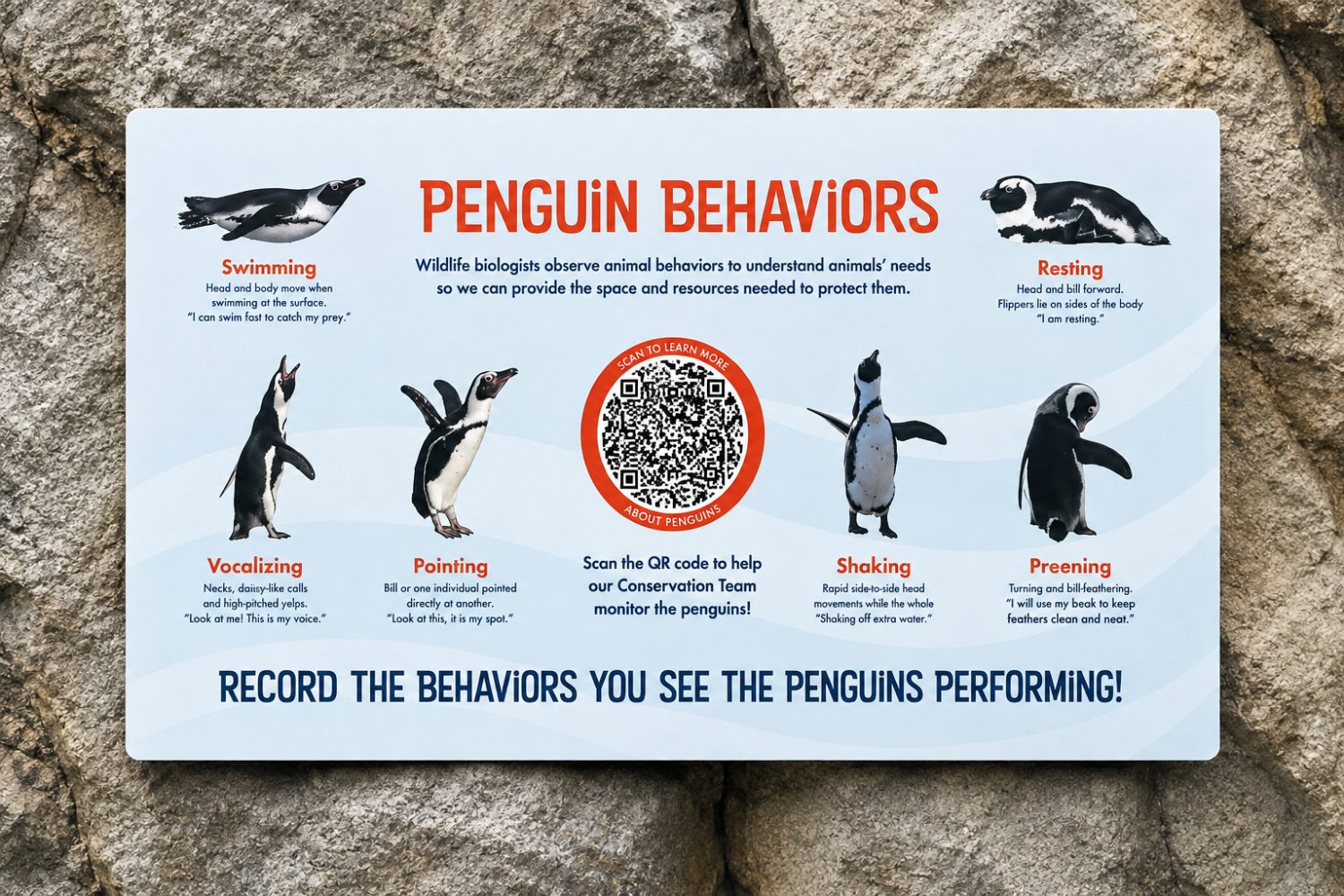
Zoo New England and Jacksonville Zoo are using CheQRboard to make that process more interactive by inviting visitors to participate in behavioral observation through QR-powered signage.
Instead of guests simply reading a sign and moving on, both zoos can ask them to become part of the research process. Visitors scan a QR code, observe the animal in front of them, and report what behaviors they are seeing. This could include things like where an animal is spending time, how it is interacting with its environment, whether it is active or resting, or how it is engaging with other animals.
By pairing creative signage with simple digital forms, Zoo New England and Jacksonville Zoo are turning everyday guest moments into useful behavioral insights.
Turning Observation Into Engagement
This approach gives visitors a more meaningful role during their visit. Rather than passively viewing an exhibit, guests are invited to slow down, observe more closely, and contribute to the care and understanding of the animals.
A prompt might say something like:
This makes the experience educational and interactive while helping guests understand that animal care is thoughtful, ongoing, and data-informed.
It also creates a deeper emotional connection. When guests are asked to observe an animal’s behavior, they are more likely to notice details, ask questions, and understand the work that goes into protecting and caring for that species.

Supporting Animal Care Teams
Guest-submitted observations are not meant to replace professional animal care staff, but they can create an additional layer of insight. Over time, this data can help teams identify patterns, understand how animals are using their spaces, and gather more feedback across different times of day or visitor conditions.
For example, Zoo New England can use CheQRboard to collect observations related to activity levels, location preferences, social interactions, enrichment response, and other visible behaviors. The data can then be reviewed by staff to support internal discussions, exhibit planning, and future animal care decisions.
Jacksonville Zoo: Behavioral Animal Observations and Enrichment Feedback
Keepers place new objects, scents, textures, and puzzles into habitats to encourage natural behaviors. But those items stay in the habitat long after staff move on, and no team can watch every animal all day. CheQRboard gives the zoo a way to collect guest observations about how animals interact with those items throughout the day.
QR codes near participating habitats give guests a way to help fill that gap. A quick scan opens a short set of structured questions about what the guest is watching, from which item the animal chose to how long it stayed engaged and what behaviors showed up along the way. Those responses show the animal care team real data points from hours and habitats they cannot cover on their own.
For guests, it turns a passing glance into a closer look at how zoos actually study behavior. They observe with purpose, and they see how their input supports the people caring for the animals. The result is more behavioral coverage for staff and a more engaged visit for everyone else.
At this point, you might as well book a demo.
No pressure. Just 20 minutes, a few ideas for your venue, and absolutely no 47-slide sales deck.